
Perimenopause & Menopause Treatment in westchester & New york city (NYC)
Perimenopause and menopause can be a time of significant changes altering physical, psychological, and emotional wellbeing. Our Certified Menopause Practitioners have the experience and knowledge to help you treat your symptoms and get your life back. Maze Health specializes in perimenopause & menopause treatment for patients in Westchester, New York City, Connecticut, and New Jersey.
Maze’s Unique Approach

At Maze, our team of Certified Menopause Practitioners provides a complete medical evaluation, starting with a detailed consult and blood work, followed by a customized treatment plan that we build together. No matter which combination of symptoms you’re experiencing, or how long you’ve been dealing with them, our goal is to help you find real relief — even if you’ve had unsuccessful results elsewhere.
Menopause and perimenopause can dramatically affect libido, sleep, energy levels, body composition, and mental health, and we believe it’s essential to be treated and monitored by a team with deep menopause expertise. Maze Health specializes in perimenopause treatment for patients across Westchester, New York City, Connecticut, and New Jersey.
Our approach begins with a complete evaluation, including blood work, so we can understand what’s driving your symptoms, not just treat them in isolation. This allows us to address the full picture of perimenopause symptoms or menopause symptoms and develop a personalized plan that is tailored to your body, goals, and symptom profile, and we refine it with you over time based on how you respond.
Because menopause and perimenopause can impact so many areas of life — including sleep, mood, focus, libido, energy, and body composition — effective menopause treatment often requires both expertise and ongoing monitoring. Maze’s team of Certified Menopause Practitioners focuses on evidence-based treatment and careful follow-up, so you feel supported and medically guided throughout the process.
We also know many patients come to us after feeling dismissed or trying treatments that didn’t work. Regardless of where you’re starting, we help you reset with a thorough workup and a plan built specifically for you. Maze Health serves patients throughout Westchester, NYC, Connecticut, and New Jersey.
Defining Perimenopause and Menopause
Perimenopause and menopause are often used interchangeably, but they mean different things, and the definitions can feel confusing. The clearest “bottom line” is this: when a woman with ovaries has gone 12 full months without a menstrual cycle, she is considered to be in menopause, and her official menopause date is the date of her last period. From that point forward, she is menopausal for the rest of her life, whether or not she has symptoms. Perimenopause, on the other hand, is the transition phase between the first hormonal changes or symptoms and the date a woman is officially in menopause. Perimenopause commonly lasts 5–7 years on average, but it can last 10–12 years. Perimenopause symptoms can vary dramatically from person to person and from stage to stage.
Menopause can only be identified retrospectively. You don’t know you’ve reached menopause until you’ve gone a full 12 months without a period, at which point you can look back and identify that the day 12 months earlier (your last menstrual period) was your official menopause date. From that date onward, you are considered menopausal for the rest of your life, whether or not you experience menopause symptoms.
Perimenopause is everything that happens before that official menopause date — the transition phase between the onset of the first changes or perimenopause symptoms and menopause itself. It’s common for perimenopause to last about 5–7 years, though it can be longer (up to 10–12 years). During this time, symptoms can look very different between women and can also shift as you move from earlier stages to later stages of the transition.
Take our Menopause Quiz to assess your symptoms, and explore our chart to learn more about common symptoms and menopause treatment options.

The Stages of Menopause
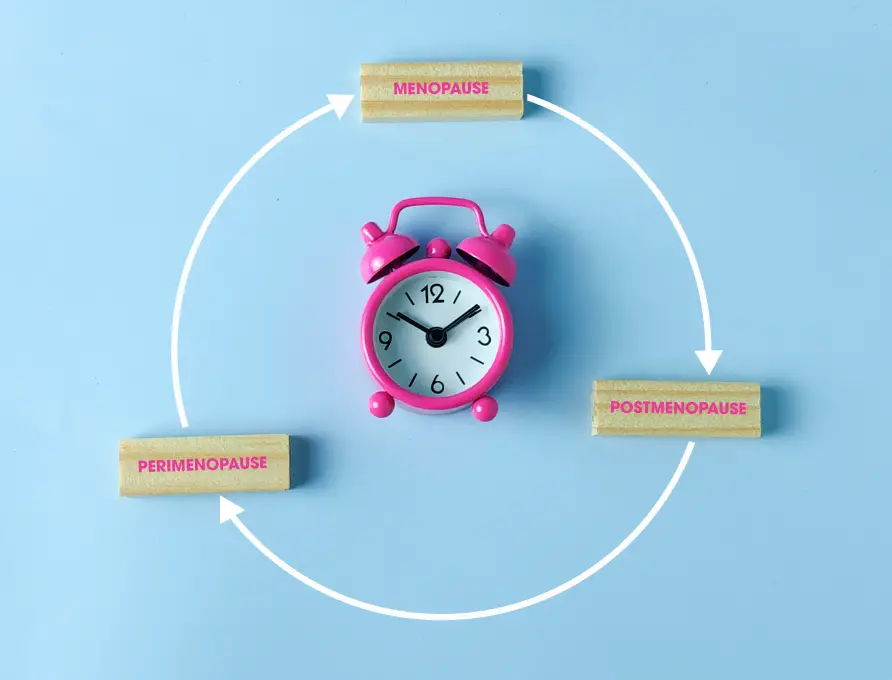
Menopause is not a single moment; it’s a transition that typically happens in stages, starting with perimenopause and ending in postmenopause. At Maze, we break this transition into early peri, late peri, and menopause/postmenopause because symptoms — and the hormones driving them — often change over time. Early perimenopause is commonly linked to a decline in progesterone in the second half of the cycle, while late perimenopause is often driven by declining and fluctuating estrogen, which can cause more classic symptoms like hot flashes, night sweats, brain fog, and skipped periods. Menopause is officially marked by the last day of your last period, though it can only be confirmed after 12 consecutive months without a period, and from that point onward, you enter the postmenopausal stage.
The first phase of perimenopause is called “early peri.”
During this time, your periods might be fairly regular, but they may start to get closer together. Your menstrual bleeding may be heavier than before. Chemically, what is happening in your body is that you are experiencing a decline in progesterone during the luteal phase of the cycle (the second half of your menstrual cycle, the two weeks or so prior to your period). This progesterone drop can cause mood changes, difficulty sleeping, and menstrual cycle changes.
The second phase of perimenopause is called “late peri.”
This phase is characterized by estrogen levels that are declining, but may also be fluctuating, sometimes wildly. These estrogen swings lead to more of the classic perimenopause symptoms: hot flashes, night sweats, weight gain, dry skin, vaginal thinning, low libido, skipped periods, and brain fog. For many women, this is the point at which structured perimenopause treatment becomes especially important.
The last phase in this transition is menopause or post-menopause.
Menopause itself is actually marked by a single day, the last day of your last period. It can be frustrating that menopause can only be identified retrospectively. That is, you will only know, after a full 12 months without a period, that the day 12 months ago was your official date of menopause. Once that point is reached, estrogen production from the ovaries has ended, and any ongoing menopause symptoms are managed through long-term monitoring and appropriate menopause treatment. This is how things will remain for the rest of your life, and you will now enter the phase described as being postmenopausal.
- Premature menopause refers to menopause that occurs before the age of 45. This occurs in about 5% of women and can be caused by any number of reasons, including genetic factors or illnesses.
- Induced menopause can refer to “surgical menopause” or “medically induced menopause.” Surgical menopause occurs with the surgical removal of both ovaries prior to the average age of menopause. Medically induced menopause refers to the suppression of ovarian hormones in a premenopausal female. This is sometimes part of treatment for breast cancer or severe endometriosis.
Menopausal Symptoms and Diagnosis
Perimenopause and menopause can feel confusing because symptoms are often varied, subtle, and hard to pin down — and many women worry they’re being “overly sensitive” or that it’s “all in their head.” At Maze, we emphasize that perimenopause symptoms and menopause symptoms are real and are hormonally and neurologically based. Common symptoms include vaginal dryness and irritation, hot flashes and night sweats, brain fog, mood changes, sexual dysfunction, weight changes, and sleep disruption. Nearly all of these can be improved with the right treatment plan. Diagnosing menopause, however, isn’t as simple as a single lab test. While blood work like FSH (follicle-stimulating hormone) can sometimes provide helpful context, it does not diagnose menopause on its own, and tests like AMH (anti-mullerian hormone) may offer insights into ovarian reserve but are not currently reliable enough to predict menopause timing in routine clinical practice.
Treatment for Menopause and Perimenopause

Effective menopause treatment isn’t one-size-fits-all; it’s the combination of expertise, medical options, and whole-person support that creates meaningful relief. The gold standard includes using the full range of evidence-based tools available, which may include medications, hormones, lifestyle interventions, and other therapies, along with psychological support. At Maze, our Certified Menopause Practitioners take an integrated approach that starts with a comprehensive evaluation, complete blood work, and a personalized treatment plan built around your symptoms, goals, and medical history. Whether you want to address root hormonal drivers or focus on treating specific symptoms, we work with you to tailor a plan that feels realistic, supportive, and effective.
Hormone Replacement Therapy (HRT) for Menopause
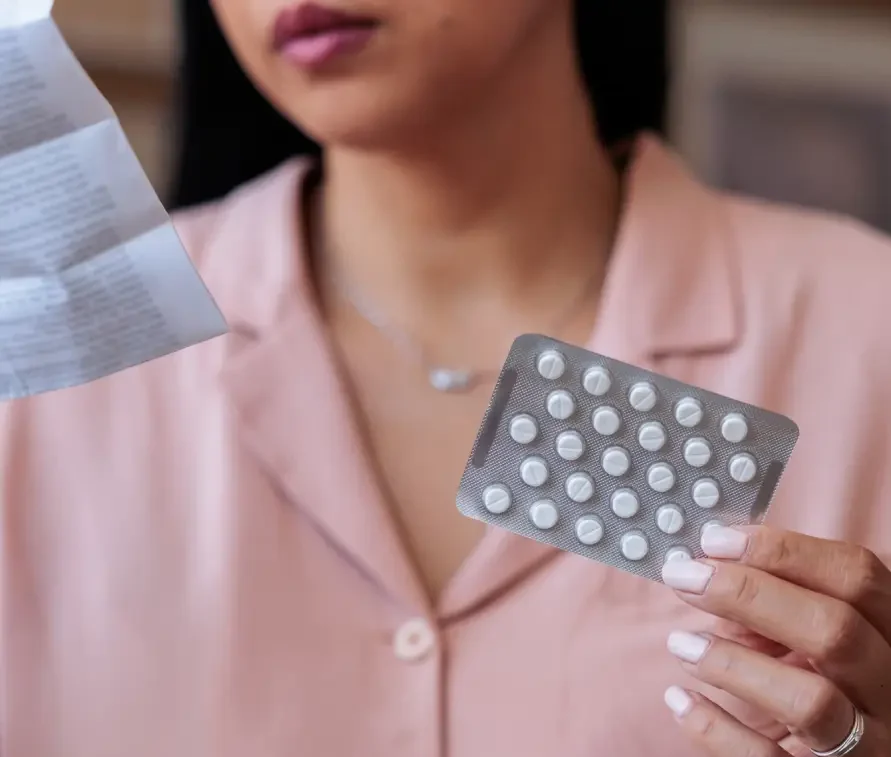
Hormone replacement therapy (HRT) is the most common overall medical approach to treating menopause symptoms. And when clinicians say HRT, they’re typically referring specifically to estrogen replacement. HRT is most often prescribed for women with moderate to severe symptoms, and it’s also commonly recommended for women who experience premature or early menopause (before age 45) or who are at significant risk for bone loss/osteoporosis. Estrogen can be prescribed systemically to support the whole body (including the brain, bones, skin, vulva, and vagina) or as local therapy to target the vulva and vagina specifically. While there has historically been confusion and fear around HRT due to early interpretations of the 2002 Women’s Health Initiative (WHI), current guidance from the North American Menopause Society (NAMS) considers HRT safe and effective for most women when started before age 60 or within 10 years of the final menstrual period.
Non-Hormonal Menopause Treatment Options
If you don’t want to use hormones, you still have options for menopause and perimenopause symptom relief. There are non-hormonal FDA-approved medications that can help with common symptoms like vaginal dryness and hot flashes, along with over-the-counter moisturizers and lubricants that can improve comfort. Non-hormonal therapies such as MonaLisa Touch, a fast and painless laser treatment, may also help with vaginal symptoms without using hormones. In addition, lifestyle changes can provide meaningful relief for mild to moderate symptoms. Some women also explore herbal supplements, but it’s important to understand that research is limited and supplements are not government-regulated, so safety and effectiveness can vary.

There are non-hormonal FDA-approved medications that can help with vaginal dryness and hot flashes, including Osphena (ospemifene) for vaginal dryness and Brisdelle (paroxetine) for hot flashes. Over-the-counter vaginal moisturizers and lubricants can also help with vaginal dryness, and many women find it useful to try a few options to see what feels best. (You can also point patients to your recommended lubricant list so they can find one that’s right for them.)
A newer option that many patients and physicians like is MonaLisa Touch, a laser treatment that is fast, painless, and does not involve the use of hormones. Lifestyle changes can also offer relief from hot flashes and other menopausal symptoms — especially when symptoms are mild to moderately bothersome — such as wearing light layers to avoid overheating, engaging in physical activity to reduce stress, and making dietary changes like limiting spicy foods, alcohol, and caffeine.
Some women are interested in herbal supplements. There are supplements that may help because they were thought to act like estrogens, but research is limited and we don’t know enough about efficacy or safety. Supplements are not regulated by a government agency and can contain more, less, or even different substances than what’s listed on the label, and “herbal” does not mean side effect-free. If you choose to explore supplements, it’s worth doing so with caution. Three that are commonly discussed include black cohosh (which has mixed evidence for hot flashes and has been associated in some reports with liver concerns), soy isoflavones/phytoestrogens (which may influence estrogen receptors and hot flashes, though responses vary), and ERr 731 (Rheum rhaponticum), a rhubarb extract that has been studied for reduced hot flash frequency/severity, decreased anxiety, and improved well-being in perimenopausal women.
About Dr. Werner and Maze
About Dr. Werner
About Maze
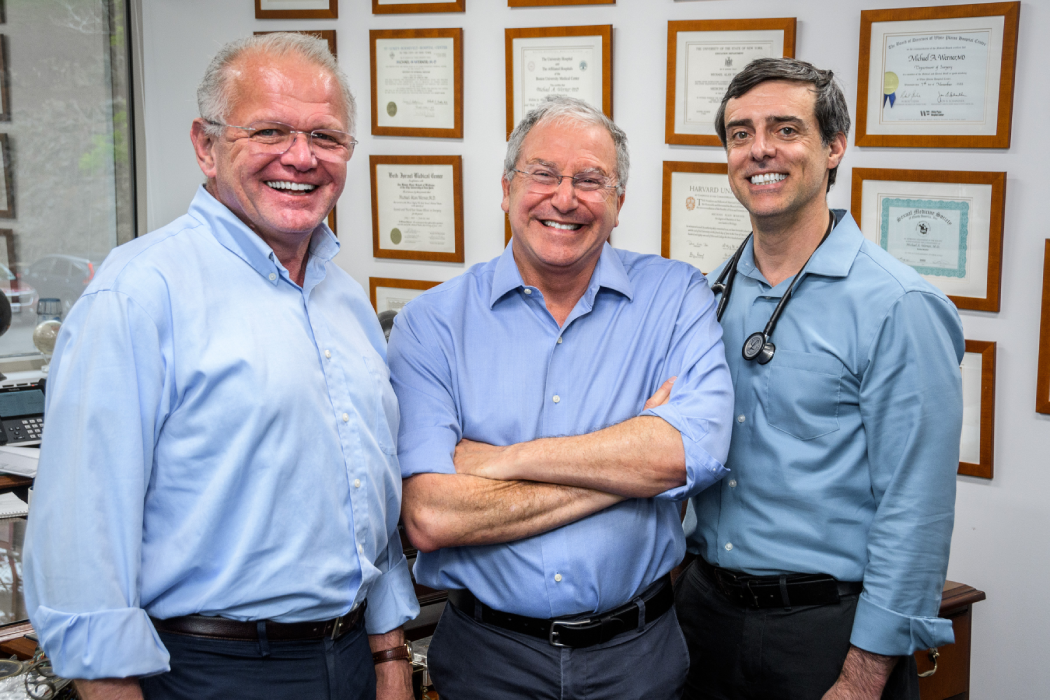







Maze facilities
Areas served

Patient Stories
My Maze treatment is like a fountain of youth!
I came to Maze Women’s Health after a multi-year struggle with my health. I saw internists, gynecologists and cardiologists and no one understood my symptoms or offered solutions. I was tired, light headed, my heart was racing, I wasn’t myself in the gym, intimacy with my husband was extremely painful, and my blood pressure went from low to high.
Then after doing a lot of online research, I realized that everything I was experiencing was likely related to menopause. I came to Maze and was so relieved to hear that I wasn’t crazy and that there were solutions. The Maze team was so knowledgeable, helpful and kind, especially Melissa, who has become one of my most trusted health care providers.
Prior to coming to Maze I thought that post menopause life was going to be pretty dreary but not so. I have my life back!
N, NY, Age 63
Painful sex and menopause: Maze was the best decision I ever made.
As I exited your offices yesterday, I felt both regret- that I had waited so damn long to get help, and great excitement- that there was hope in resolving my issue.
I had not realized how menopause was slowly taking away some of the emotional treasures of my life. I had made peace with my suddenly furry face and having to throw off my blankets in the middle of the night, but painful sex was taking away the cherished intimacy between my husband and myself.
I had gone to my gynecologist a few months earlier and when I brought up the pain, my gynecologist dismissed it as peri-menopausal and recommended a different lubricant. More recently, when I mentioned the pain to a close friend, she insisted that I go to Maze center and get evaluated. That it was too early in my life to start compromising on the quality of my sex life. Initially, I was resistant at setting up the appointment and having to reveal such intimate details to a group of strangers but after another episode of painful sex, I made the appointment. I consider it one of the best decisions I have ever made.
The Maze team was lovely, compassionate and very respectful. They were patient and explained to me everything was taking place in my body and that there was no need to live with the ongoing pain. They laid out several options and made me feel that there was hope in resolving my issue. I walked out of the office feeling great relief and excitement.
When I had discussed my issue with many of my friends, they mentioned having similar issues but had taken no action- and they asked me to report back if I had found a solution. Well- I have a solution and it’s the Maze center. I will be sharing my findings with any woman that mentions this challenge. It is horrible that so many women are suffering needlessly with symptoms of menopause that can be so easily treated.
I cannot thank the Maze center enough.
THANK YOU!
B, NY, Age 48
Positive hormone treatment experience:
I saw an article in Redbook featuring your medical center and kept reading this article over and over, until one day I decided to call. I had a severe medical illness that put me into full menopause. I am 46 years old. I had a bone marrow transplant 3 years ago, I had a-plastic anemia and was given 3 weeks to live without the transplant. I am 3 years out and healthy but I am in menopause and thought no doctor could help me; that was until I saw your article.
About 3 weeks ago I saw Rachel and Cathleen in the Great Neck office. I had no idea what to expect or know what was going to happen at my visit. I researched your practice online but still wasn’t sure.
My husband and I went together to the visit. First I saw Rachel, who was amazing. She talked with me for a while and asked me questions and she was so kind, unassuming and non-judgmental. I have been to numerous doctors so I brought a package of blood results with me. Then I saw Cathleen who gave me an examination and also spoke to me, she was so kind and caring. We spoke about my options since I had a comprehensive blood work with me I was able to get started on my plan of action that day.
We then brought my husband in and we went over all of this with him. Rachel was so sensitive while talking to the both of us. Both Rachel and Cathleen really get it and understand where we are coming from. They are so gentle! I was amazed at my visit. I was prescribed testosterone gel.
I had some questions so I called my team Rachel and Cathleen. They both got right back to me and were so helpful. I am so happy I came to the center. You guys understand what women are going through!!!
I saw my gynecologist and brought her all the info on your center. I told her all about my visit and what medication I was given. She was so happy that a place like this existed on Long Island!
I just want to tell you that my experience with Rachel and Cathleen has been outstanding, and I am so looking forward seeing them again. My husband is on board with this as well. He feels so comfortable talking to both Rachel and Cathleen.
A, NY, Age 46
Low sexual desire after menopause success story:
November 2010
I went into menopause abruptly at age 46 — my period disappeared and never returned. Even though I had once had a robust sex life, gradually I felt sexually numb, dry and neutered. When I remarried at age 50 my new husband was patient and loving. He would gingerly initiate sex hoping I would show some interest but I just couldn’t fake it anymore. It was upsetting but it seemed we would just have to accept it. Then one day I read an article about Maze Women’s Sexual Health in the New York Times that featured Bat Sheva Marcus. I felt, at last, maybe there is something I can do. With some hesitation, I made an appointment. My husband was skeptical but I just wasn’t ready to give up sex without a fight.
From the first visit Bat Sheva and Melissa at Maze were so helpful. First, they did some tests, and sure enough my hormones were practically undetectable. They took a thorough sexual history, with no judgement and listened to my questions and allayed my anxieties about whether or not I would ever feel sexual again. Through trial and error we tried various combinations of hormones, other forms of estrogen, progesterone and testosterone and although we thought the problem would be solved in a few months, it took over a year. But they never gave up, and neither did I. This fall, 18 months after starting the hormone therapy I had sex with my husband 7 times in one weekend — all on my own initiative — and it was wonderful. I am 53 now and while I didn’t feel thirty again, but I sure felt like I was forty! My husband, who was resigned to a bland sex life, is thrilled and I feel like myself again. I learned that it takes time for your brain and body to kick in, but the many months of therapy were worth it.
I encourage other women to visit the Center if they are feeling dry, menopausal, and uninterested in sex. Some of my friends scoffed at me – they still do. Who needs sex at our age? You should age naturally! Just let it go! Well I care about sex and so do Batsheva and Melissa. And they will persist and experiment until you feel better. I always had faith this treatment would work and I am glad I stuck with it. Don’t listen to your friends, or even your husband. Listen to your own body!
M, NY, Age 53
Lubricants didn't seem to help.
My sex drive diminished drastically during my first pregnancy 23 years ago. It also remained that way after the birth of my child. Looking back, I believe it was hormonally related. I allowed this to go on until recently since it seemed we were always busy, and my husband was patient so there was no rush. I did find the ability to force myself to have sex and when I did I enjoyed it, once I got into it…but I never desired it and I didn’t initiate it either. I went through menopause sometime in the last 2 years and then intercourse was painful and lubricants didn’t seem to help me. This was new, disturbing and uncomfortable.
I spoke to my sister, who is a physician, about my low sex drive and discomfort. She mentioned to me that I should ask my physician about prescribing testosterone cream. I spoke to my OB/GYN about this and he recommended I go to Maze Women’s Sexual Health. Around the same time, my husband had seen an article in the newspaper about Maze and its successes. I decided to give it a try. It was difficult to make that first phone call but I am very glad I did.
The Maze staff is very professional, kind and discreet. They are warm and easy to talk to and extremely knowledgeable. I felt well taken care of and was very hopeful after the first visit. During the initial consultation, I spoke with a therapist (Rachel) and then had a thorough physical exam by a PA (Tara) who prescribed a cream for vaginal use on a regular basis, as well as a high quality lubricant. This alone immediately helped my comfort level during intercourse. My husband said he could feel the difference as well. They gave me ideas for helping to get in the “mood.” They prescribed testosterone cream to use and within 8 months, I got my old sex drive back and then some!
I feel the Medical Center for Female Sexuality took a very wellrounded approach to my treatment. They changed my life for the better and my husband and I are thrilled!!
A, Age 53
Painful intercourse post-menopause:
It has been three months since my initial visit and I no longer experience painful intercourse. I have my sex life back!
I was experiencing painful intercourse for about a year and with proper treatment I got my sex life back in a short period of time.
My husband is a patient of Dr. Werner’s. I went with him to an appointment one day and I saw a pamphlet in the waiting room explaining how many women experience painful intercourse post menopause. After reading the pamphlet I immediately decided to make an appointment.
My first appointment was a very pleasant experience. I had a consultation with Tara Ford and Bat Sheva Marcus and they both made me feel very comfortable. I was able to speak freely about my sex life and what I was experiencing with painful intercourse. The next thing was the physical examination. Tara described each part of the exam to me prior to it being done. I was relaxed during the exam as I knew what to expect. My reaction did not change, but just reinforced my decision to seek treatment.
My treatment included medication first and then dilation. I began to see results within the first month and my condition kept getting better with every week that went by.
Women should know that they are not alone. There are many women experiencing the same problem. If you are experiencing post-menopausal painful intercourse like I was, don’t wait to seek treatment. Make an appointment right away. You too can get your sex life back.
MC, CT, Age 51
Mid-life sexual changes:
I learned about Maze Women’s Sexual Health in a New York Times article about women and mid-life sexual changes. I had been having less and less interest in sex along with discomfort (dryness primarily), so sex itself was uncomfortable even when I was interested. My body just seemed to be drying up. I went through menopause about four years ago and I thought once that was done that the changes would stop, but they didn’t. That’s when the dryness and lack of interest and response became worse and worse.
I talked to my regular gynecologist about this and she prescribed Vagifem. It helped a little with the dryness, but sex was still uncomfortable and I still had very little interest or response. I thought about calling Maze for a while before I actually made the call because I felt embarrassed, but the staff was really nice and obviously knew how to handle the calls. I was nervous going to the first appointment, especially filling out the forms and answering questions that were embarrassing to me. When I met with Melissa and Rachel, I felt like my problem was nothing new to them but at the same time I felt like I was a unique person. They listened really closely, they had good senses of humor and I felt like they understood what I was trying to tell them.
At the first appointment, they took blood work, gave me some vaginal cream to use to complement the Vagifem (and explained why the Vagifem doesn’t always work alone) and talked to me about the role testosterone plays in a woman’s sexual response. I learned a ton!
I’m now taking the estrogen cream and Vagifem along with a testosterone gel and it has made a huge difference. I have no pain or discomfort during sex and I have a much better response than I’ve had in years! I know so many women could benefit from this kind of support and I’d encourage them to make a call and go see what can be done.
PB, NY, Age 59
Vaginismus and dyspareunia after menopause:
Shortly after going through menopause I started experiencing searing pain during intercourse. I spoke to my gynecologist about it and he prescribed some hormone cream. It didn’t help the problem and my doctor said there was nothing he could do. So for many, many years I abstained from intercourse with my husband.
On the Internet one day I found information about Maze Women’s Sexual Health. I was very interested and thought maybe they could help me. I waited four months before I gave them a call.
I called and filled out the necessary forms and set up my first appointment. I first spoke with a sex therapist and then with Melissa. She explained the treatment to me, which was simple enough. During the first treatment I did experience some pain, but worked through it and eventually it subsided. I progressed through the treatment quickly. It took about three months after which my husband and I finally tried to have intercourse again and I was totally pain free! I was so thankful to the Center for their patience and understanding. I am celebrating my 40th wedding anniversary and I feel like a young bride again.
SS, NY, Age 65
Menopause and painful sex:
For about 5 years, around my menopausal period, sexual intercourse with my husband became painful. We stopped having sexual intercourse and we both got so busy between work, family (older parents), our own children and other things.
I told my gynecologist and she tried to help me, but we were not successful. My gynecologist referred me to Maze. After all that time, and all our attempts at solving the problem ourselves, I was ready to get help.
I made the appointment because I needed help, so I listened to everything they told me and followed their instructions the best I can. They did not ask me to do anything that I was not comfortable doing.
My condition needed a process called “dilation”. I did it gradually under their supervision until I reached the state where I may try to have sexual intercourse with my husband. It took more or less 5 months from my first visit due to several disruptions on my part.
I had some little setbacks during the process, but Maze was always there to help me. Now, I feel happy to be able to fulfill one of my duties as a wife.
It turns out my situation is common to many women my age. There is help out there. We have to ask and I believe the best place to start is with our gynecologist. If you can’t get help there, don’t give up.
This women’s condition is not a sickness. This is part of aging process which unfortunately we all have to go through. I am just thankful that nowadays there are professionals who can help us address this condition and not face it by ourselves.
T, CT, Age 61
Thinning vaginal walls due to menopause:
Originally I thought I had an extremely bad yeast infection that just wouldn’t go away. I finally went in to see the doctor and he told me that I was inflamed and irritated and he prescribed a higher dosage of medication to deal with the infection.
The medication didn’t help with the inflammation and irritation and at the same time I started to complain about painful intercourse and light bleeding afterwards.
The doctor then recommended using Vagifem after explaining that what was happening was a thinning of the vaginal walls due to menopause. It was frustrating and disheartening. I used Vagifem daily for 2 weeks and the condition did not improve.
At the end of that 2 week period my husband and I attempted intercourse again and I had to have him stop due to the pain.
My doctor then put me on Premarin for 2 weeks nightly, and again at the end of that time period sex felt like someone was rubbing sandpaper in and out of my vagina. My husband of 34 years was supportive but he was also frustrated.
At that time my doctor suggested I make an appointment with Maze Women’s Sexual Health. From my first phone call to them, throughout the whole process, they were completely supportive and compassionate about my concerns and difficulties.
I did feel uncomfortable with their initial line of questioning since mine was only a physical difficulty, nothing to do with lack of desire before this whole condition started.
But eventually, I found that everyone I spoke to was understanding and this helped me to deal with the problem in a more positive manner now that I felt there was finally a solution.
I followed their procedure as prescribed, at times it was uncomfortable, but eventually I started to feel an improvement. I now do the procedure 4 – 5 times a week as maintenance and I use Premarin 2 – 3 times a week. If I feel any discomfort I just make sure that I keep up with the program and it feels better. My husband and I are enjoying our sexual relationship again.
Thanks so much for your help!
LM, NJ, Age 61
Post-menopause treatment for painful sex:
I was having vaginal pain with intercourse that had developed after menopause.
I probably suffered for a year before I mentioned it to my gynecologist. After trying estrogen locally in various forms and not getting relief, she suggested I call the Center.
I did not call immediately…hoping it would magically go away just as it had started.
Finally I made the call and after reading all the emailed material on sexual malfunction and dysfunction, I felt I was definitely headed in the wrong direction…after all…there was no problem with my sex life…only that it was painful. Hesitantly, I kept my appointment. After spending some time at my first appointment with Barbara and Tara, I was really put at ease and fortunately they felt my problem was simple and could be dealt with quickly.
I’m happy to say after three weeks of using dilators regularly I am back to normal and feeling great.
Sometimes the golden years become a bit tarnished…….I should have called sooner to get the sparkle back!!