
Skip to content
  • Westchester: (914) 328-3700
  • New York City: (646) 839-0700
  • Connecticut: (203) 487-4000
  • New Jersey: (973) 913-5000
Search
Patient login
MCFS Logo
  • About
    • Our Team
    • What to Expect
    • Treating Out-of-Town Patients
    • Insurance Coverage
    • FAQ
    • Patient Reviews and Testimonials
      • Menopause Patient Reviews
      • Painful Sex Patient Reviews
      • Perimenopause Patient Reviews
      • Vaginismus Patient Reviews
      • Vaginismus Treatment Under Anesthesia Patient Reviews
      • Vulvodynia Patient Reviews
      • Low Sex Drive Patient Reviews
      • Hormone Therapy Patient Reviews
      • Orgasm and Arousal Disorder Reviews
      • Phone Consultation Reviews
    • Our Published Studies
    • Join Our Team
  • Hormone Therapy
    • Menopause Treatment
    • Bioidentical Hormones Replacement Therapy (BHRT)
    • Exercise Lab
    • Perimenopause Treatment
  • Sexual Health
  • Painful Sex
    • Vaginismus
    • Vaginismus Treatment Under Anesthesia
    • Vulvodynia
    • Shockwave Therapy for Vulvodynia
    • Dyspareunia
    • MonaLisa Touch
  • Low Libido
    • Arousal Disorders
    • Persistent Sexual Arousal Syndrome
  • Orgasm
    • The O-Shot (Orgasm Shot)
    • Post-SSRI Sexual Dysfunction
  • Resources
    • Better Sex Blog
    • In the News
    • Vaginismus Forum
    • Recommended Products
    • Maze Videos
    • Quizzes, Guides & Resources
  • Action buttons
    • Contact Us
    • Patient login
  • About
    • Our Team
    • What to Expect
    • Treating Out-of-Town Patients
    • Insurance Coverage
    • FAQ
    • Patient Reviews and Testimonials
      • Menopause Patient Reviews
      • Painful Sex Patient Reviews
      • Perimenopause Patient Reviews
      • Vaginismus Patient Reviews
      • Vaginismus Treatment Under Anesthesia Patient Reviews
      • Vulvodynia Patient Reviews
      • Low Sex Drive Patient Reviews
      • Hormone Therapy Patient Reviews
      • Orgasm and Arousal Disorder Reviews
      • Phone Consultation Reviews
    • Our Published Studies
    • Join Our Team
  • Hormone Therapy
    • Menopause Treatment
    • Bioidentical Hormones Replacement Therapy (BHRT)
    • Exercise Lab
    • Perimenopause Treatment
  • Sexual Health
  • Painful Sex
    • Vaginismus
    • Vaginismus Treatment Under Anesthesia
    • Vulvodynia
    • Shockwave Therapy for Vulvodynia
    • Dyspareunia
    • MonaLisa Touch
  • Low Libido
    • Arousal Disorders
    • Persistent Sexual Arousal Syndrome
  • Orgasm
    • The O-Shot (Orgasm Shot)
    • Post-SSRI Sexual Dysfunction
  • Resources
    • Better Sex Blog
    • In the News
    • Vaginismus Forum
    • Recommended Products
    • Maze Videos
    • Quizzes, Guides & Resources
  • Action buttons
    • Contact Us
    • Patient login
Contact

Perimenopause & Pre-Existing Health Conditions
Back to Perimenopause Treatment
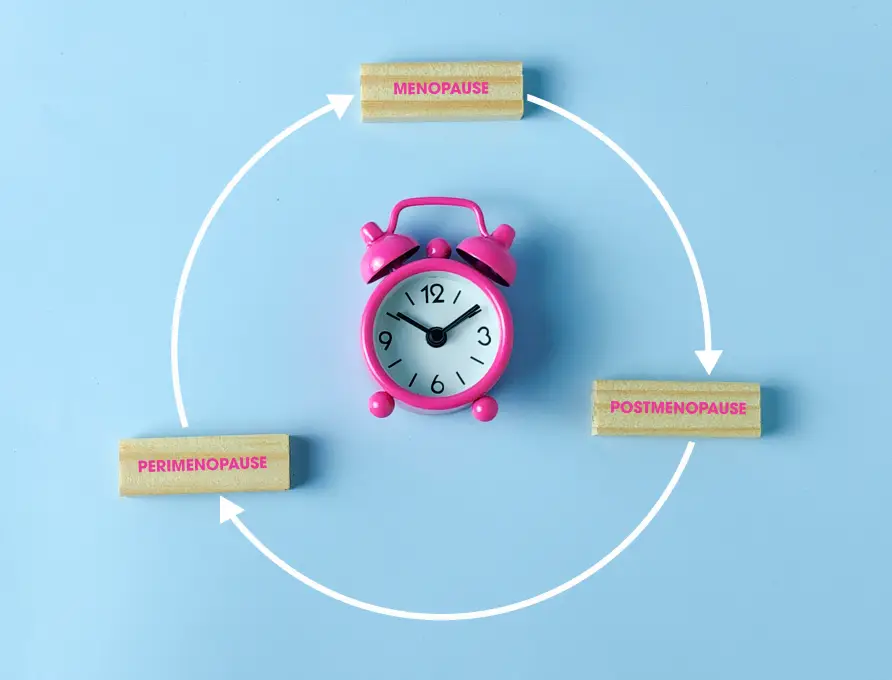
img the stages of menopause 2x
Perimenopause can affect more than your menstrual cycle — it can also worsen symptoms of pre-existing medical conditions and introduce new health challenges. As estrogen and progesterone levels fluctuate, women with ADHD, Mast Cell Activation Syndrome (MCAS), histamine intolerance, Ehlers-Danlos Syndrome (EDS), hypermobility disorders, migraines, autoimmune conditions, thyroid disorders, anxiety, and fibromyalgia may experience changes in symptom severity, including brain fog, difficulty concentrating, joint pain, fatigue, mood changes, flushing, and digestive disturbances. The relationship between hormonal changes and these conditions varies, and research into some connections is still emerging. For women with a personal or family history of breast cancer, ovarian cancer, gynecologic cancer, or BRCA gene mutations, navigating perimenopause treatment and hormone replacement therapy (HRT) requires additional consideration.

We take a personalized, evidence-based approach to managing perimenopause with chronic health conditions, evaluating how hormonal fluctuations may interact with existing diagnoses while considering individual medical history and risk factors. Our approach includes individualized hormone therapy assessments, non-hormonal perimenopause treatments, and coordinated care with specialists when appropriate. Whether you’re experiencing worsening symptoms of an existing condition or wondering whether hormone therapy is safe with a family history of cancer, our goal is to help you understand your options and develop a treatment plan that prioritizes symptom relief, safety, and long-term health.

When Perimenopause Collides With a Pre-Existing Condition

Not every woman starts perimenopause from the same baseline. For patients with certain pre-existing conditions, the hormonal fluctuations of this transition can amplify symptoms in ways that are often missed or misattributed — which is one more reason early, individualized evaluation matters.

img the stages of menopause 2x

ADHD. Estrogen plays a supportive role in dopamine signaling, the same neurotransmitter system central to attention, focus, and executive function. For women with ADHD, estrogen’s decline and unpredictable swings during perimenopause can unmask or intensify symptoms that were previously well-managed — worsening focus, working memory, and emotional regulation. Some women are diagnosed with ADHD for the first time during this transition, after decades of quietly compensating.

Mast Cell Activation Syndrome (MCAS) and histamine sensitivity. Estrogen and progesterone both influence mast cell activity and histamine metabolism, with estrogen tending to stimulate mast cells and progesterone tending to help calm them. As progesterone often declines earlier and more steeply than estrogen in perimenopause, some women notice new or worsening symptoms such as hives, flushing, heart palpitations, digestive upset, or heightened reactions to foods and medications. This research area is still developing, and MCAS itself requires formal diagnostic criteria — but the hormone-histamine connection is a legitimate reason some patients’ symptoms feel disproportionately severe.

Hypermobility Spectrum Disorders (HSD) and Ehlers-Danlos Syndromes (EDS). Estrogen and progesterone both influence collagen strength and connective tissue integrity. For women with HSD or hypermobile EDS — conditions that already involve more fragile or extensible connective tissue — hormonal shifts in perimenopause can translate into increased joint instability, pain, and injury frequency, along with common associated issues like fatigue, GI symptoms, and autonomic symptoms (such as lightheadedness or a racing heart on standing). Research specifically linking hormone fluctuations to hypermobility symptoms is still limited, but it’s an area of growing clinical interest, and many patients report a noticeable pattern between their cycle or menopause transition and symptom flares.

Other conditions that can be affected. Autoimmune disorders, migraine (especially with aura), anxiety and mood disorders, thyroid conditions, and fibromyalgia have all been reported to fluctuate alongside hormonal shifts in perimenopause, though the strength of evidence varies by condition. In many cases, symptoms that seem unrelated to hormones are, at least in part, being modulated by them.

If you have a pre-existing condition and feel like your perimenopause symptoms are more intense, more confusing, or less responsive to standard approaches than what others describe, that’s worth bringing directly into your evaluation. Coordinated care — between your perimenopause clinician and any specialists managing these conditions — often leads to better symptom control than treating each issue in isolation.

img the stages of menopause 2x

Hormone Therapy with a Personal or Hereditary Cancer Risk

A personal history of breast or gynecologic cancer, a known BRCA mutation, or a strong family history changes this conversation significantly, and deserves its own careful, individualized discussion.

For most people with a personal history of hormone-receptor-positive breast cancer, systemic hormone therapy is generally avoided — but “generally avoided” isn’t the same as “no options,” and the right path still depends on your specific diagnosis, treatment history, and symptoms.

For those with a BRCA mutation but no personal cancer history, the picture is more nuanced: risk is tied primarily to breast and ovarian tissue rather than to hormone therapy itself, and factors like whether risk-reducing surgery (such as oophorectomy) has been done change what’s reasonable to consider. A history of certain gynecologic cancers, such as endometrial or ovarian cancer, carries its own separate set of considerations distinct from breast cancer history.

In all of these situations, we coordinate closely with your oncologist or genetic counselor rather than making this decision in isolation. Non-hormonal options — including the non-hormonal treatments described throughout this page — are typically prioritized first. In some cases, low-dose vaginal estrogen for severe genitourinary symptoms may still be discussed with oncology input, since it acts locally with minimal systemic absorption, but this is always evaluated case by case rather than assumed to be safe by default.

Have A Question?

Please call 914-328-3700 or complete the form below to schedule a consultation

  • Should be Empty:

BETTER SEX BLOG

iStock 1395647257

Perimenopause, Sleep, Mood, and Brain Fog: What’s Normal and What Helps

You walked into the kitchen and forgot why. You were wide awake at 3 a.m. again. And the little things that never

Read More
iStock 1161412690

Perimenopause and Your Body: Belly Fat, Muscle Loss, and Bone Health

Your jeans fit differently, but the scale barely moved. You’re working out like you always have, but your midsection seems to have

Read More
iStock 1629208680

Perimenopause Treatment Options: Hormonal and Non-Hormonal Relief

So you’ve noticed the signs. Your cycle has gotten a little unpredictable, you’re waking up at 3 a.m. drenched in sweat, or

Read More
logo footer 2x

Maze Women’s Sexual Health

Maze advocates diagnosis of and treatment for the physical causes of female sexual dysfunction, as well as any underlying psychological influences, by integrating education and psychological counseling with medical techniques specifically to help you achieve a full and satisfying sex life.

Harvard University coat of arms.svg.webp
beth israel 2x.webp
boston medical 2x.webp
boston university 2x.webp
jts 2x.webp
montefiore 2x.webp
mount sinai pt 2 2x.webp
mount sinai 2x.webp
st lukes hospital 2x.webp
ucsf school of medicine logo 2x.webp
westchester medical center 2x.webp
white plains hospital 2x.webp

Westchester

  • 440 Mamaroneck
    Avenue, Suite 201
    Harrison, NY 10528
  • (914) 328-3700

New York City

  • 633 Third Avenue,
    Suite 9B
    New York, NY 10017
  • (646) 839-0700

Quick Links

  • Maze Health Group
  • Maze Men’s Health
  • Maze Labs
  • Maze Medical Fitness

Connecticut

  • (203) 487-4000

New Jersey

  • (973) 913-5000

navigation

  • About Us
  • Menopause Treatment
  • Orgasm Treatment
  • Painful Sex Treatment
  • Low Libido Treatment
Tiktok Facebook-f Youtube Instagram Pinterest X-twitter
Patient Login
Contact Us
© 2026 Maze Women’s Sexual Health All Rights Reserved.
  • Privacy Policy
  • Website by Pronto
We use cookies to ensure that we give you the best experience on our website. If you continue to use this site we will assume that you are happy with it.