
Skip to content
  • Westchester: (914) 328-3700
  • New York City: (646) 839-0700
  • Connecticut: (203) 487-4000
  • New Jersey: (973) 913-5000
Search
Patient login
MCFS Logo
  • About
    • Our Team
    • What to Expect
    • Treating Out-of-Town Patients
    • Insurance Coverage
    • FAQ
    • Patient Reviews and Testimonials
      • Menopause Patient Reviews
      • Painful Sex Patient Reviews
      • Perimenopause Patient Reviews
      • Vaginismus Patient Reviews
      • Vaginismus Treatment Under Anesthesia Patient Reviews
      • Vulvodynia Patient Reviews
      • Low Sex Drive Patient Reviews
      • Hormone Therapy Patient Reviews
      • Orgasm and Arousal Disorder Reviews
      • Phone Consultation Reviews
    • Our Published Studies
    • Join Our Team
  • Hormone Therapy
    • Menopause Treatment
    • Bioidentical Hormones Replacement Therapy (BHRT)
    • Exercise Lab
    • Perimenopause Treatment
  • Sexual Health
  • Painful Sex
    • Vaginismus
    • Vaginismus Treatment Under Anesthesia
    • Vulvodynia
    • Shockwave Therapy for Vulvodynia
    • Dyspareunia
    • MonaLisa Touch
  • Low Libido
    • Arousal Disorders
    • Persistent Sexual Arousal Syndrome
  • Orgasm
    • The O-Shot (Orgasm Shot)
    • Post-SSRI Sexual Dysfunction
  • Resources
    • Better Sex Blog
    • In the News
    • Vaginismus Forum
    • Recommended Products
    • Maze Videos
    • Quizzes, Guides & Resources
  • Action buttons
    • Contact Us
    • Patient login
  • About
    • Our Team
    • What to Expect
    • Treating Out-of-Town Patients
    • Insurance Coverage
    • FAQ
    • Patient Reviews and Testimonials
      • Menopause Patient Reviews
      • Painful Sex Patient Reviews
      • Perimenopause Patient Reviews
      • Vaginismus Patient Reviews
      • Vaginismus Treatment Under Anesthesia Patient Reviews
      • Vulvodynia Patient Reviews
      • Low Sex Drive Patient Reviews
      • Hormone Therapy Patient Reviews
      • Orgasm and Arousal Disorder Reviews
      • Phone Consultation Reviews
    • Our Published Studies
    • Join Our Team
  • Hormone Therapy
    • Menopause Treatment
    • Bioidentical Hormones Replacement Therapy (BHRT)
    • Exercise Lab
    • Perimenopause Treatment
  • Sexual Health
  • Painful Sex
    • Vaginismus
    • Vaginismus Treatment Under Anesthesia
    • Vulvodynia
    • Shockwave Therapy for Vulvodynia
    • Dyspareunia
    • MonaLisa Touch
  • Low Libido
    • Arousal Disorders
    • Persistent Sexual Arousal Syndrome
  • Orgasm
    • The O-Shot (Orgasm Shot)
    • Post-SSRI Sexual Dysfunction
  • Resources
    • Better Sex Blog
    • In the News
    • Vaginismus Forum
    • Recommended Products
    • Maze Videos
    • Quizzes, Guides & Resources
  • Action buttons
    • Contact Us
    • Patient login
Contact

Perimenopause Brain Fog & Memory Changes
Back to Perimenopause Treatment
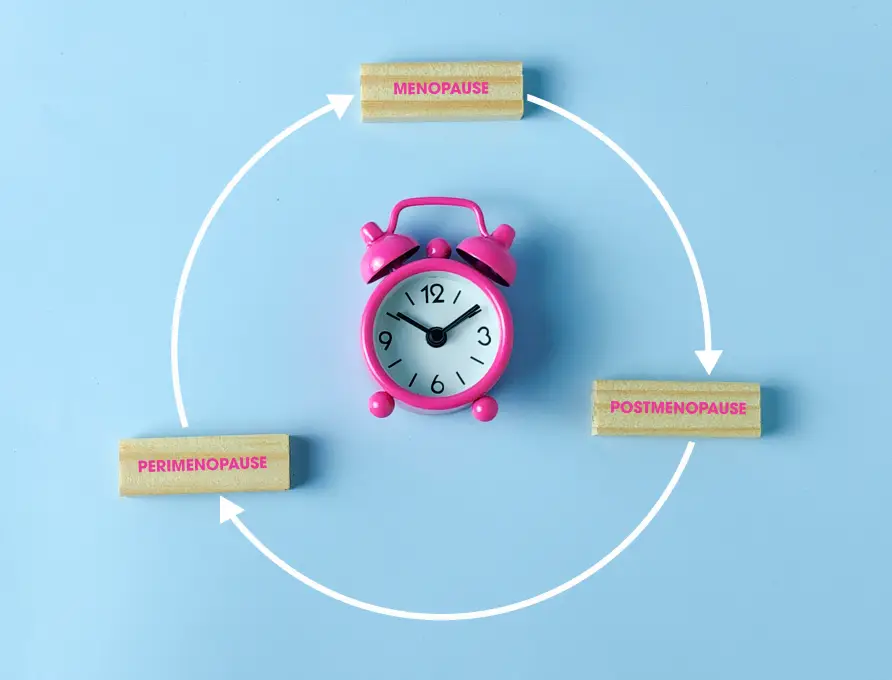
img the stages of menopause 2x
Brain fog, forgetfulness, memory loss, and difficulty concentrating are common but often overlooked symptoms of perimenopause and hormonal changes in women. As estrogen levels fluctuate during the menopausal transition, women may experience short-term memory problems, trouble finding words, reduced mental clarity, slower thinking, difficulty focusing, and changes in cognitive function. These symptoms, often referred to as perimenopause brain fog, can affect work performance, daily responsibilities, confidence, and overall quality of life. While these cognitive changes can feel alarming, research suggests that hormonal brain fog during perimenopause is often temporary, with many women experiencing improvement after menopause.

We take a comprehensive approach to evaluating perimenopause-related memory changes and cognitive symptoms, considering hormonal fluctuations, sleep disturbances, stress, anxiety, thyroid conditions, iron deficiency, and other potential contributors. Our personalized approach to perimenopause symptom management focuses on identifying underlying causes and exploring evidence-based strategies to improve sleep, support cognitive health, and restore mental clarity. Brain fog during perimenopause is real, and persistent memory changes deserve to be taken seriously, not dismissed as a normal part of aging.

Few perimenopausal symptoms cause as much quiet worry as brain fog. Losing a word mid-sentence, walking into a room and forgetting why, or struggling to concentrate at work can feel alarming — and women experiencing it often don’t mention it to a clinician at all, or wonder privately whether it’s an early sign of dementia. The reassuring news, backed by two decades of longitudinal research, is that this is a real, well-documented, and — for the vast majority of women — temporary feature of the transition itself.

How common is it, and what does it feel like?

Estimates vary by study, but self-reported cognitive complaints are common: in the large Study of Women’s Health Across the Nation (SWAN), which has followed thousands of women through the menopause transition for over two decades, complaints of forgetfulness were reported by 31% of premenopausal women, rising to 44% in early perimenopause and remaining elevated (around 41%) in late perimenopause and beyond. Other reviews estimate that roughly half to two-thirds of women notice some cognitive change during this period.

Which cognitive abilities are actually affected

When researchers test cognition directly rather than relying on self-report, the pattern is more specific than a general “fog”:

  • Verbal learning and memory — the ability to learn and later recall spoken or written information — show the most consistent decline across longitudinal studies, appearing in the majority of studies that have looked for it.
  • Processing speed (how quickly the brain can take in and respond to information) is also commonly affected.
  • Working memory and attention show less consistent effects across studies — some find measurable changes, others don’t, suggesting these domains are more variable from woman to woman.
  • Interestingly, one distinguishing feature isn’t necessarily a drop in raw scores, but the absence of the usual improvement seen with repeated testing — in most adults, taking the same cognitive test again shows a practice effect (scores improve slightly just from familiarity), and this expected improvement often doesn’t show up during perimenopause, which may be part of what registers subjectively as “not as sharp as I used to be.”

Why it happens

Estrogen receptors are dense in the hippocampus and prefrontal cortex — the brain regions most responsible for memory formation and executive function — and estrogen supports how efficiently brain cells use glucose for energy. As estrogen fluctuates and eventually declines through perimenopause, this metabolic support becomes less consistent, and some researchers describe measurable, temporary changes in brain energy use during this window. Research in which the ovaries are surgically removed or hormonally suppressed has shown resulting declines in verbal learning and memory that are then reversed with estrogen treatment — supporting a real, causal role for estrogen in these changes, rather than the symptoms being purely a byproduct of poor sleep or stress (though those absolutely make it worse, see below).

Does it resolve?

This is the question most women actually want answered, and the data are reassuring: SWAN’s findings indicate that the cognitive dip is generally limited to the perimenopausal window itself, with performance stabilizing in postmenopause. The Penn Ovarian Aging Study found a similar but slightly more nuanced pattern — verbal memory difficulties tended to resolve after the transition, while some verbal learning differences persisted longer for a subset of women. Across the major longitudinal studies, the consistent theme is that this is a transient dip tied to the hormonal turbulence of the transition itself, not the start of a progressive decline.

How this differs from a more serious concer

Perimenopausal brain fog and early Alzheimer’s-type cognitive decline can superficially resemble each other — both can involve word-finding trouble and moments of forgetfulness — but they behave differently. Perimenopausal brain fog tends to fluctuate with sleep quality, stress, and hormonal shifts, and it doesn’t typically impair the ability to learn genuinely new information or recall it after a delay, which are hallmark early markers of a neurodegenerative process. That said, any memory change that comes on suddenly, progresses steadily rather than fluctuating, or involves getting lost in familiar places or difficulty managing familiar tasks warrants prompt medical evaluation rather than being assumed to be hormonal.

Other contributors worth ruling out

Because brain fog is a symptom rather than a diagnosis, it’s worth screening for other causes that are common in this same age group and can compound or mimic it:

  • Hypothyroidism, which is common in midlife and often under-recognized
  • Iron-deficiency anemia, particularly relevant for women also dealing with heavy perimenopausal bleeding
  • Depression and anxiety, both of which independently affect concentration and memory and are common during this transition
  • Sleep apnea, discussed above, which is under-diagnosed in women and can present largely as fatigue and poor concentration
  • Poor sleep generally — research has found associations between poor sleep quality and worse performance on tests of verbal memory, attention, and general cognition in this age group, and hot flashes and night sweats that fragment sleep may compound cognitive symptoms independent of estrogen’s direct effects
  • Certain medications, including some antihistamines and other sedating drugs

What can help

Beyond identifying and treating any of the contributors above, a few approaches have some evidence behind them:

  • The timing hypothesis extends to cognition. Data from the KEEPS trial (women who started estradiol within three years of menopause) showed improvements in verbal memory and mood with treatment — consistent with the broader “critical window” idea discussed earlier in this guide, where starting hormone therapy earlier in the transition appears more favorable than starting many years later. Hormone therapy isn’t FDA-approved specifically as a treatment for brain fog or for dementia prevention, but this data is part of why the conversation about timing matters for cognitive symptoms too.
  • Prioritizing sleep — including addressing hot flashes and night sweats that fragment it — is one of the more directly actionable levers, given how closely sleep and cognitive performance are linked in this population.
  • Staying cognitively engaged — continuing to learn new skills, take on complex tasks at work, or pick up novel hobbies — is generally considered protective for brain health over the long term, though it’s not a specific treatment for the perimenopausal dip itself.
  • Stress-reduction approaches, including mindfulness-based stress reduction, have some trial-level evidence for easing cognitive symptoms during this transition.

Brain fog during perimenopause is common, biologically real, and — for the large majority of women — temporary, typically improving within a year or two after the final period as the brain adjusts to its new hormonal baseline. It deserves to be taken seriously and discussed openly rather than dismissed, both because effective evaluation can rule out other contributing conditions, and because for many women, simply understanding what’s happening and knowing it’s expected to improve is itself a meaningful relief.

Have A Question?

Please call 914-328-3700 or complete the form below to schedule a consultation

  • Should be Empty:

BETTER SEX BLOG

iStock 1395647257

Perimenopause, Sleep, Mood, and Brain Fog: What’s Normal and What Helps

You walked into the kitchen and forgot why. You were wide awake at 3 a.m. again. And the little things that never

Read More
iStock 1161412690

Perimenopause and Your Body: Belly Fat, Muscle Loss, and Bone Health

Your jeans fit differently, but the scale barely moved. You’re working out like you always have, but your midsection seems to have

Read More
iStock 1629208680

Perimenopause Treatment Options: Hormonal and Non-Hormonal Relief

So you’ve noticed the signs. Your cycle has gotten a little unpredictable, you’re waking up at 3 a.m. drenched in sweat, or

Read More
logo footer 2x

Maze Women’s Sexual Health

Maze advocates diagnosis of and treatment for the physical causes of female sexual dysfunction, as well as any underlying psychological influences, by integrating education and psychological counseling with medical techniques specifically to help you achieve a full and satisfying sex life.

Harvard University coat of arms.svg.webp
beth israel 2x.webp
boston medical 2x.webp
boston university 2x.webp
jts 2x.webp
montefiore 2x.webp
mount sinai pt 2 2x.webp
mount sinai 2x.webp
st lukes hospital 2x.webp
ucsf school of medicine logo 2x.webp
westchester medical center 2x.webp
white plains hospital 2x.webp

Westchester

  • 440 Mamaroneck
    Avenue, Suite 201
    Harrison, NY 10528
  • (914) 328-3700

New York City

  • 633 Third Avenue,
    Suite 9B
    New York, NY 10017
  • (646) 839-0700

Quick Links

  • Maze Health Group
  • Maze Men’s Health
  • Maze Labs
  • Maze Medical Fitness

Connecticut

  • (203) 487-4000

New Jersey

  • (973) 913-5000

navigation

  • About Us
  • Menopause Treatment
  • Orgasm Treatment
  • Painful Sex Treatment
  • Low Libido Treatment
Tiktok Facebook-f Youtube Instagram Pinterest X-twitter
Patient Login
Contact Us
© 2026 Maze Women’s Sexual Health All Rights Reserved.
  • Privacy Policy
  • Website by Pronto
We use cookies to ensure that we give you the best experience on our website. If you continue to use this site we will assume that you are happy with it.