
Maze Medical Fitness Testing (MMFT)
Our medical grade fitness testing delivers objective, clinical-grade data on your body composition, your bone density and structure and finally your metabolism, and cardiovascular fitness. The metrics that we receive from our lab play a critical role in how we treat you and how we monitor you throughout your treatment.
Why We Have Maze Medical Fitness Testing
Fitness as well as body and bone composition are central to women’s health at every age. Whether you’re optimizing hormones through menopause, managing PCOS with lifestyle and medication, or working with our urogynecology or women’s sexual wellness teams, your body composition and metabolic health directly impact how well your care plan works.
MMFT establishes your baseline at the start of your treatment and provides consistent, measurable data throughout your journey. This means we have clear metrics on how your body is responding: whether you’re maintaining lean muscle, reducing visceral fat, building healthy bone, and improving your metabolism and cardiovascular conditioning. These biomarkers are closely tied to sexual wellbeing too — better body composition, cardiovascular health, and metabolic fitness often mean improved arousal, lubrication, and sexual satisfaction. If progress slows or reverses, we catch it early and fine-tune your plan before your intimate life takes a hit.
What Testing can the Medical Fitness Lab Perform?
DEXA Body Composition Scans:
Using the gold-standard technology for precision body composition analysis, we measure your fat mass, lean mass, and fat distribution, including visceral fat around your organs. This is far more accurate than the inBody measurements available at some gyms or home. It is the only way to accurately assess visceral fat, which is metabolically active and important to monitor.
DEXA Bone Density Scans:
The same DEXA technology provides critical data on your bone mineral density (BMD), identifying bone loss in its earliest stages — well before symptoms appear. Not only do we measure bone density, but we do sophisticated analysis that examines the bone structure as well. These two factors help predict fracture risk and can be followed over time, and can improve with hormone replacement therapy and/or testosterone treatment. Thus it is particularly important to monitor during the menopausal and perimenopausal periods.
VO2 Max Testing:
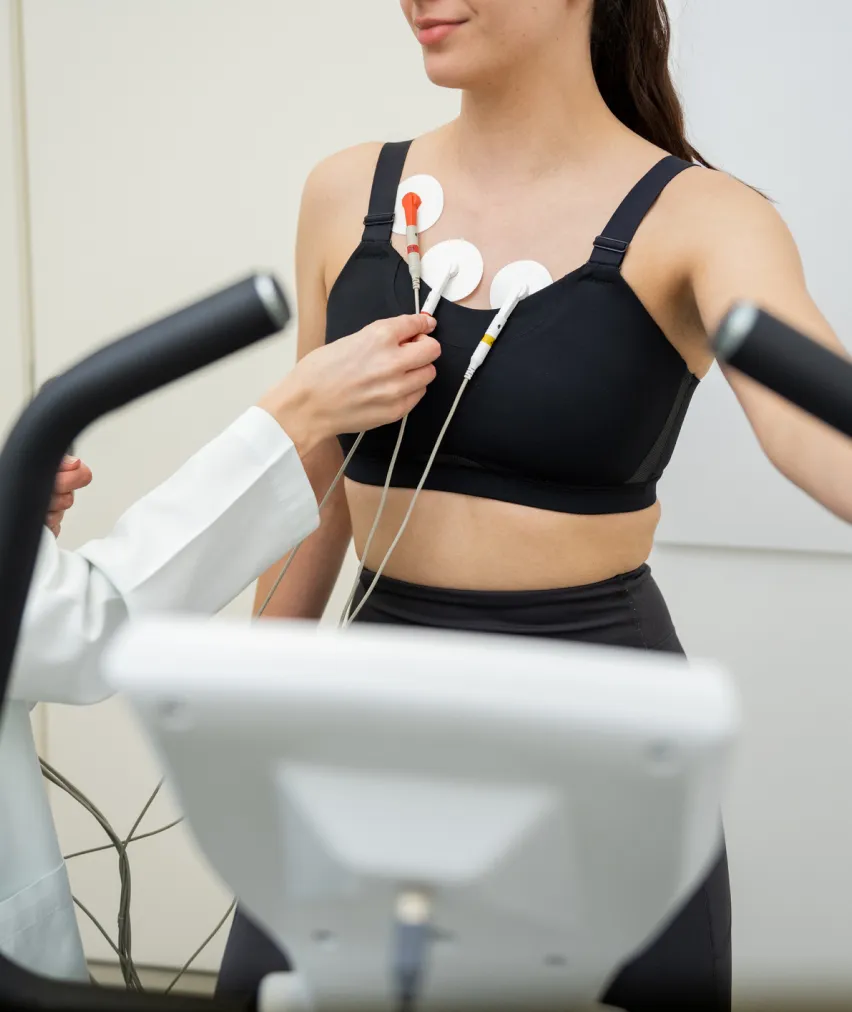
Our FDA approved cardiopulmonary exercise testing system measures your maximum oxygen utilization during exercise — a key indicator of cardiovascular health and fitness. Tracking your VO2 Max progress shows how your fitness is improving with your treatment plan, which should include a combination of medication, diet and exercise.
RMR (Resting Metabolic Rate) Testing:
This is the measurement of how many calories you burn at rest. Roughly 60–75% of a woman's total daily energy expenditure comes from her resting metabolic rate. Most of the rest comes from exercise and movement. Menopause, PCOS, and some women's health medications can directly impact your resting calorie burn, for better or worse. Thus one size fits all exercise and diet regiments can't account for your unique physiology. Measuring your individual RMR gives you personalized data to plan your nutrition and exercise plans. Sometimes we find that women are paradoxically taking in too few calories to maximize their weight loss (if desired) and health.
Key Women's Health Metrics We Track
 Visceral Adipose Tissue (VAT):

The deep abdominal fat surrounding your organs, is strongly linked to insulin resistance, cardiovascular risk, and metabolic issues in women. Scales or usual inBody testing at gyms can't distinguish VAT from other fat. DEXA tracking shows how your VAT responds to lifestyle changes and treatment.
Bone Mineral Density (BMD) and Trabecular Bone Structure (TBS):
Women's bone density and structure can deteriorate rapidly in menopause and with certain medications. Deteriorating bone density and structure can be reversed by timely medical (usually hormonal), nutritional, and exercise management.

VO2 Max:
A critical measure of cardio fitness and stamina, especially as women age. Improving VO2 Max is tied to better heart health, insulin sensitivity, and overall vitality. The right exercise and treatment plan can make a measurable difference. The VO2 Max not only assess where you start, but can monitor your progress over time. It can also help you figure out what zone of exercise you are in and which ones you should aim for.
Resting Metabolic Rate (RMR):
Your true resting calorie burn. RMR guides nutrition planning, healthy weight management, and helps us understand how your metabolism is adapting to menopause, PCOS treatment, and lifestyle changes.